
 PC
PC  Xbox
Xbox  E-cards
 The Blood of Dawnwalker Review: A Dark Debut from a New Studio with Roots in The Witcher
Rebel Wolves turns its Witcher pedigree into a dark, reactive vampire RPG where time, hunger and unfinished quests shape Coen’s journey. Despite some technical rough edges, The Blood of Dawnwalker stands as a remarkable debut and one of the genre’s strongest releases in years.

A ruler who regularly draws blood from his subjects should be assured of a place in hell. Brencis, however, complicates this straightforward task by first saving the Vale Sangora valley. When a plague sweeps through the region and the ruling authorities respond by executing the infected, the vampires offer their own blood as a cure. The disease recedes, the looting ceases, and life slowly begins to return to the villages. The bill for the inhabitants will come later...
Every adult must pay a bloody tribute; resistance is punished, and faith in God is replaced by the cult of the new ruler. Brencis needs a land that continues to work, bear children and replenish his supplies. Thanks to this, his rule is not merely another fantasy tyranny that can be ended by plunging a sword into the right spot in the chest. The people under his rule suffer, yet they remember what came before him; Plagues. Famine. Soldiers. Mass graves.
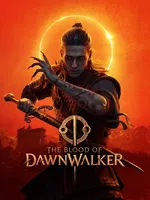
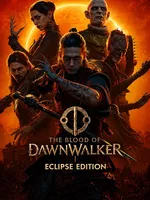
And in the midst of it all stands our main ‘hero’, Coen, a young miner from the small village of Laslea. His sister Lunka is among the infected, and the chain of events at the start tears the whole family apart, whilst turning Coen into a dawnwalker – a human by day, and after dark a vrakhir with fangs, claws and a thirst for blood. Yes, ‘vrakhir’ is the original term for vampires in the game, which gives these creatures something extra. From the outset, the authors establish their own origins, hierarchy and rules for them. Meanwhile, Brencis is planning a coronation, during which he intends to sacrifice his captives, including Coen’s loved ones. There are thirty days left until the ceremony.
The story of rescuing a family sounds almost suspiciously straightforward for a major RPG. After a few hours, it becomes clear that the family is merely a fixed point around which the player crafts their own path. Brencis can be weakened, his allies eliminated, the resistance of the locals bolstered, and local disputes resolved in a thousand different ways. But you’re perfectly free to ignore most of it. Individual storylines remain optional, and events in Vale Sangora do not revolve exclusively around Coen’s arrival.
So what sort of game is it, then? The Blood of Dawnwalker is a dark, even gloomy, vampire-themed fantasy RPG built on strong sandbox elements. Time, daily periods, Coen’s hunger, his reputation and the open-ended ways of tackling quests constantly influence one another, and a single decision can set several systems in motion at once, whilst its full impact may only become apparent after several hours. Now let’s move on to the game’s core mechanics.

Thirty Days, No Stopwatch
That is the time limit, which initially aroused more anxiety than curiosity in me. In RPGs, I tend to veer off towards every ruin, listen in on every conversation and put off the main story until some game mechanic starts to feel like a list of outstanding tasks. Dawnwalker disrupts this habit through its very structure, and does so in a surprisingly considerate way.
The calendar only advances during pre-designated activities. You can therefore wander the countryside at your leisure, search for a path or rummage through your equipment, and the game won’t secretly chip away at your thirty days. Both day and night are divided into eight segments, and before any time-consuming activity, you can see its cost (and, as we already know, time is the game’s currency). Quests consume the most time, but resting, treasure hunting, training skills and the occasional lengthy conversation will also take their toll.
During the first few days of playing (days in game time, not in real life kind of time), I was far too cautious with my time. Every segment seemed like something I’d end up missing out on just before the end. Gradually, it became clear that thirty days offer enough leeway for a reasonable playthrough, and the main story doesn’t require you to be constantly rushing. However, there still isn’t enough time for everything, and that’s where the system began to make sense.
In a typical open world, you think about what to do first. Here, you also decide what to leave undone. Will you help the village, spend time improving your skills, or follow a lead that might turn out to be a dead end? Is it worth investing time in someone who has so far only asked for something vague? Quite simply, you won’t manage to sort everything out in a single playthrough, and after a few hours it ceases to be sensible to even try.

The result is not constant stress, but rather a sense of responsibility for the direction Coen’s journey is taking. Some events continue even without his involvement. Arriving late can shift the quest into a new situation, and the player then has to deal with the consequences of their own delay. Failure, a botched conversation or a bad decision work in a similar way, often opening up a different version of the story, so that immediately loading an earlier save feels more like a missed opportunity.
You can head straight into the final conflict very early on, although an unprepared Coen will find himself facing roughly what one would expect from a visit to a vampire’s castle armed with a rusty sword. Once the final day has passed, the story continues under conditions that are no longer entirely within the player’s control. In any case, it’s perfectly possible to complete the main storyline in as little as 20 hours, without having to cut back on the experience offered by side quests. What’s more, even the most pointless conversations can lead to the most interesting content you’ll find in the game. The truth is, however, that you’ll enjoy playing through the story much more if you spend more time on a single playthrough.
This freedom is occasionally curbed by recommended levels, so a difference in strength can turn a seemingly open path into a far worse idea than it initially appeared. Whilst this didn’t stop me in my tracks, on a few occasions it steered me in a more obvious direction than would have suited the rest of the adventure.

Vale Sangora, Romania, Far Cry 5 and Sandbox Romance
Vale Sangora is a compact enclave inhabited by both humans and monsters, probably situated somewhere within the territory of present-day Romania. The journey between two places doesn’t take an eternity, and over time you’ll come to recognise the individual villages, marshes, mines and mountain trails without having to constantly consult a compass. Rebel Wolves have filled the map with characters, relationships and conflicts that intertwine. Repeatable camps and interchangeable quests take a back seat here.
An inconspicuous task might open up access to another group, reveal an enemy’s weakness, or alter the conditions of something that will happen much later. The game doesn’t always make these connections explicit. Sometimes I only realised the impact of an earlier decision during a conversation that, under different circumstances, would have unfolded differently. At other times, the reward manifested itself in a more practical way – through assistance in combat, a new path, or information that I would otherwise have had to obtain by force.
It is precisely here that the sandbox nature of Dawnwalker is best demonstrated. The developers set up an objective, several characters with their own agendas, and a set of rules within which the player can operate. There are multiple paths leading to Brencis, and his power can be undermined in various places. Conversations, exploration and previous decisions regularly offer a way to avoid direct combat. It should be added, however, that Brencis and his three main henchmen are very reminiscent of the enemy structure in Far Cry 5, which may suit some players but not others. I found the system to be well-designed, and his henchmen provided a welcome variety.

The choice of allies remains just as open. You can take on Brencis by joining the human resistance, seeking support amongst disgruntled vampires, turning to sorcery, or pursuing your own interests. Collaborating with the enemy constitutes a fully-fledged narrative path and can lead to a completely different portrayal of Coen and a different conclusion.
Such a branching narrative would quickly fall apart without good characters. Coen has his own past and clear motivations, but his character can be shaped. In conversations, he can come across as pragmatic, compassionate, naive or calculating without having to change his personality every time depending on the tone of the chosen response. Romantic relationships also develop quite naturally, and the game does not treat them as a mandatory reward for stringing together the right compliments.
The Witcher’s Shadow, One’s Own Blood
Do these mechanics seem somewhat familiar? Well, of course they do. Behind Dawnwalker is the Warsaw-based studio Rebel Wolves, co-founded in 2022 by Konrad Tomaszkiewicz, game director of The Witcher 3 and one of the lead developers on Cyberpunk 2077. He gathered other CD Projekt RED veterans around him, and the team has since grown to around 160 people. They’ve set about creating a type of game they know intimately; as a result, Dawnwalker at times feels like the outcome of an alternative timeline, in which some of the creators decided, after Wild Hunt, not to return to Geralt but to build their own rules, world and mythology.
The connection extends far beyond the branching quests; it is evident in the camera work, character movement, user interface, investigations and the way in which a conversation can veer away from a seemingly simple task. However, the time system, the interweaving of the times of day with the story, the more open-ended structure of the storylines and the vertical movement through the night-time world all push the game in its own direction. Thus, from the foundations of The Witcher, a distinctive spiritual successor has emerged, brimming with its own ideas, which is entertaining and has a soul of its own. For me, it’s the perfect blend of the familiar and the unfamiliar.

Vale Sangora is held together in part by its historical foundation. It is set in the Carpathians of the 14th century and exists in an alternative version of the real Europe. Real-life countries and cities, including Prague, are mentioned in the books and in dialogues. Wooden villages, the fortified town of Svartrau, religious rituals and local superstitions are drawn from the history and folklore of Central and Eastern Europe.
Vampire rule permeates trade, faith, work and even everyday travel. As a result, its presence can be felt even far from the grand cinematic scenes. The locals accept the existence of monsters with the weariness of people who have already endured the plague, heavy taxes and empty pantries. For them, a vampire represents yet another threat – or perhaps their last hope for survival. It is precisely these small details that make the world feel so authentic.
When Darkness Falls, It’s Not Just the Appearance That Changes
Coen’s split into a human and a vrakhir could have remained nothing more than a flashy gimmick for the trailers. Fortunately, Rebel Wolves have incorporated it into movement, combat, equipment and quest design. Certain locations and activities are only accessible during specific times of day, as both forms possess their own unique abilities.
By day, Coen uses a sword, potions, scrolls and magic, which costs him a portion of his health. He moves like a capable, yet still relatively ordinary, human. At night, he grows stronger, unleashes his claws and begins to feed on his enemies’ blood. Gradually, he learns to cover greater distances in a single movement, run along walls and reach places that cannot be accessed by normal means during the day. Later on, his ability to transform into animals, including a wolf, also makes travelling easier for him.

I naturally enjoyed night-time more, and it wasn’t just about the higher speed. Both the city and the countryside suddenly offered another layer of routes, and the obstacles that dictated my direction during the day ceased to matter. With that, my view of ordinary people along the way also changed – to a human, they are a source of information; a hungry vampire might see something quite different in them.
Blood fuels Coen’s abilities, restores his health and raises his vampire level. At the same time, hunger interferes with conversations. When in a poor state, it can introduce a dangerous option and occasionally override the original response. The player thus bears the consequences of neglected fitness even off the battlefield. A single night-time conversation is enough for a damaged relationship or a prematurely ended story to start hurting more than an empty health bar.
This is another reason why Dawnwalker finally does justice to vampires in video games. Coen’s curse affects movement, exploration, relationships and decision-making before every night-time conversation. Vampiric power brings freedom, whilst hunger brings the risk of losing control. The game captures the allure of this concept and regularly reminds you of the danger Coen poses to those around him. And I enjoyed every single moment of it!

The progression of the two forms is partially separate, and the game allows you to prepare different sets of equipment for day and night. A bonus suited to magic may not be of any help with vampire abilities, so having two sets is of practical importance. The inventory, however, does not deserve such praise. Filtering and moving items feels clunky, capacity is limited by weight, and getting rid of accumulated rubbish takes longer than it should. After a few trips back to the merchant, my choice of loot was mainly determined by the desire to grapple with the offerings once more.
Crafting remained on the periphery throughout my playthrough. I found plenty of consumable items, and most situations could be managed without regular visits to crafters. Crafting thus expands the range of preparation options, but it is not one of the game’s core systems.

Four Directions and Far Too Many Opponents
Combats are based on attacks and blocks executed from four directions (similar to Kingdom Come), and this system can be used actively or you can rely on simpler controls. A precisely timed block creates an opening for a counter-attack, the correct direction of a strike helps bypass the defence, and mindlessly hammering the button will quickly deplete your stamina. Against a single capable opponent, the individual elements come together nicely. You need to track the weapon’s movement, manage your stamina, and know when to use magic or a vampire ability. And let’s not forget the brutality, of which there’s plenty here. Blood can spurt from absolutely anywhere, both in the gameplay itself and in the cutscenes. Simply a gore feast for the eyes and horror enthusiasts.
And then there are the larger groups of enemies that reveal the limits of this system. The camera and targeting can’t reliably keep up with the surroundings; an attack might come from off-screen, and precise directional cover takes a back seat to the need to escape the crowd. Towards the end, there’s also a lack of variety among the enemies, and some of them can withstand an unreasonable number of hits for what they’re supposed to be ‘nobodies’. I still had a good time with duels and stronger enemies, but the routine encounters didn’t offer much that was new in the second half.

Sneaking turned out to be even less effective. Soldiers, bandits, ghosts and even vampires spot Coen far too easily, and the environment doesn’t offer enough opportunities for a reliably stealthy approach. After a few failed attempts, I eventually gave up on this approach altogether. The feeling of being a nocturnal predator works brilliantly when moving across rooftops, but the role of an inconspicuous assassin falls apart at the first sign of an alert guard. It’s highly likely that the developers will sort this out in the near future. Or, even better, the modders will take care of it themselves!
The authorities react to Coen’s rampage in much the same way as in other RPGs. A growing reputation as an enemy of the regime brings higher prices, more patrols and restrictions on the movement of residents. At higher levels, the guards stop waiting for provocation and immediately engage in combat. Even a powerful Coen therefore feels the real consequences of open resistance. If you spend days on end destroying Brencis’s men in the valley, their superiors will act accordingly.

Visually Captivating, But You Can Tell Where They Cut Corners
Visually, The Blood of Dawnwalker can be stunning. The Carpathian forests at sunrise, the mist-shrouded marshes, the rooftops of Svartrau by night, and the strongholds of the vrakhirs all have an atmosphere all of their own. The changing times of day, the light, and the varying ways of moving around keep the map feeling fresh for considerably longer than its size would suggest. So, naturally, I found myself pausing to take in certain views even when there was no promise of experience points or loot.

The artistic style helps to mask the areas where the budget was insufficient to achieve the same level of detail. This is most evident in the faces of the inhabitants of this bleak landscape. Key characters have convincing facial expressions and relatively well-directed scenes, whilst less significant inhabitants sometimes deliver their lines with the expression of someone reading them from across the room. The difference between the main and supporting characters is thus all too apparent. However, the overall visual impression does not suffer significantly as a result.
The English dubbing does much of the work for the animation and adapts the dialogue to suit different cultures and locations. Humans and non-human beings sound distinct, whilst retaining the shared character of the world. The music blends strings, female vocals, bagpipes and folk motifs, giving the night-time sequences in particular an almost ceremonial air at times. It suits Vale Sangora perfectly and plays a significant part in shaping its identity. However, the soundtrack could do with more tracks, as in the second half its most distinctive motifs recur so frequently that, after a while, it becomes somewhat tiresome in places.
The Technical Section is Asking for More Time
The biggest challenge remains tolerating the technical flaws. Fluctuating performance, minor visual glitches and the occasional freeze serve as a reminder that Rebel Wolves do not yet have the resources of the biggest studios. Most of the issues I encountered whilst playing were resolved by reloading my save, and none of them permanently blocked my progress. However, their sporadic occurrence does detract from an otherwise confident impression. Let me give an example – I approached a quest from one side, killed two guards, but the cutscene didn’t trigger; yet when I approached from the other side, the cutscene did trigger, but the guards were already dead, so I couldn’t complete the quest.
And essentially, it is primarily the technical state of the game that prevents Dawnwalker from achieving the highest rating. The inventory and lack of music aren’t complaints that particularly spoil the experience. Metaphorically speaking, they’re like flies in the flat – they’re a nuisance for a moment, but are gone in an instant, and so on and so forth. At the same time, this is the area with the greatest potential for gradual improvement through updates. A poorly designed story or a shallow world would be much harder to fix.

So, How Did The Game Turn Out?
The Blood of Dawnwalker is a confident debut from a studio that knows exactly why people still remember the best quests from The Witcher 3 to this day. Rebel Wolves have taken the familiar foundations and supplemented them with a thirty-day timeframe, strong sandbox elements, consequences for failure, and various options for Coen’s appearances, resulting in a game with its own identity built upon familiar foundations. The compact Vale Sangora offers a multitude of paths that may converge, diverge or remain unexplored forever.
Group combat still needs some fine-tuning, stealth feels somewhat underdeveloped, the inventory can be a nuisance at times, and the technical side requires further attention. However, the essential qualities remain intact: the story responds to the player, the quests feel meaningful, and the decisions you make have consequences that extend far beyond the dialogue box.
At the same time, after a long time, here is a game that truly does justice to vampires in video games. They shape the world, the way you move, character development, and even the difficult decisions that the player must live with until the very end. Dawnwalker is one of those RPGs that understands very well the difference between freedom of movement and true freedom of choice. And I have no hesitation in saying that it is one of the best and most memorable RPGs of at least the last ten years.
Verdict: 8,5/10

