
 PC
PC  Xbox
Xbox  E-cards
 The Complete History of GTA (Part 1): The 2D Era
The first part of our three-part series exploring the complete history of Grand Theft Auto takes a look at the birth of the franchise, the rise of Rockstar Games, and the evolution of GTA from its controversial 2D beginnings into one of the most influential video game series ever created.

There are game series that defined their era. And then there’s Grand Theft Auto. A franchise that, over nearly three decades, has transcended the boundaries of video games to become a global cultural phenomenon. Each new installment of this action-adventure series wasn’t just the release of another game, but an event discussed by gamers, the media, politicians, and television networks alike. From the primitive 2D chaos of the 1990s to the gigantic, detail-rich open worlds of today, Rockstar has gradually built a series that has fundamentally shaped the landscape of modern open-world games. What’s more, it has even influenced the entire gaming industry.
GTA, as the globally recognized acronym goes, was never just about stealing cars, police chases, or shootouts. Each game served as a satirical mirror of society, poking fun at politics, consumerism, social media, the media itself, and the American Dream. Liberty City, Vice City, and San Andreas didn’t become iconic just because of the size of their maps, but because they served as living caricatures of the real world. Rockstar managed to create virtual cities full of absurdity, cynicism, dark corners, and authenticity.
That is precisely why every new title was and remains an event the entire gaming industry awaits. More than ten years have passed between the release of GTA V and GTA VI, yet the series’ popularity has barely waned during this hiatus. On the contrary. The anticipation surrounding the return to Vice City today resembles the premiere of a Hollywood blockbuster and simultaneously demonstrates the strong position Rockstar has built over the years. Grand Theft Auto is no longer just a game. It is a franchise that has changed the rules of the gaming industry, and that remains true today.
In the meantime, you can pass the time while waiting for the latest GTA 6 with our in-depth analysis, where we’ve summarized everything you need to know before its release.
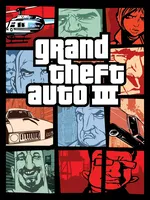
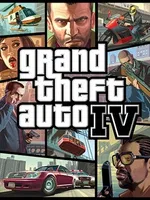
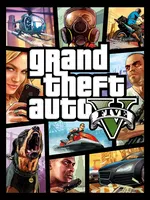
Today, the Grand Theft Auto series is most commonly divided into three main eras based on technological and gameplay progress. The first was the 2D top-down era (GTA 1, GTA 2, or London) followed by the iconic 3D era with titles like GTA III, Grand Theft Auto: Vice City and Grand Theft Auto: San Andreas, which defined open-world games for years to come. Since Grand Theft Auto IV, the series has entered the HD era, which, thanks to technological advancements, has focused on a more realistic style, more detailed cities, and a more cinematic presentation, culminating in Grand Theft Auto VI.
The Series’ Origins
The origins of the Grand Theft Auto series date back to the mid-1990s, when the Scottish studio DMA Design was experimenting with a project called Race ’n’ Chase. The original game was intended to put players on the side of the law and focus on police chases through city streets. During development, however, it became clear that chaos, destruction, and fleeing from the police were far more entertaining than law enforcement itself. A bug in the police AI later became legendary: instead of trying to arrest the player, the cops would simply try to kill them. It was precisely this moment that led the developers to the idea of creating a game in which the player isn’t a hero, but a criminal moving through an open city full of violence and anarchy.
“A brief history of Rockstar Games and Take-Two Interactive: Rockstar Games traces its roots back to a time when it did not yet exist as a separate brand, and games developed by DMA Design were published by the British publisher BMG Interactive. It was DMA Design, known for the Lemmings series, that was behind the creation of the first Grand Theft Auto, but following financial and ownership changes at the turn of the millennium, BMG transformed into Rockstar Games under Take-Two Interactive. Rockstar subsequently acquired DMA Design itself, renaming it Rockstar North, thereby creating the studio that today stands behind one of the most successful and, at the same time, most controversial game series in history.”
When the first GTA arrived on PC, PlayStation, and Game Boy Color in 1997, the gaming world reacted immediately. Controversy, aggressive marketing, and outraged media reactions helped the brand gain massive attention even before it became a global phenomenon. The series was discussed on television, in newspapers, and in political circles, and Rockstar quickly realized that scandal is a win in the world of marketing. What began as a relatively simple 2D top-down action game gradually evolved into one of the most influential game series of all time. Each subsequent entry pushed the boundaries of technology, open worlds, and storytelling in video games.

Grand Theft Auto (1997)
Arrival of GTA in 1997 marked the beginning of what would eventually become one of the most influential and recognizable franchises in gaming history. At a time when most action games kept players on a tight leash, GTA offered something completely different. Absolute freedom. Instead of linear levels, it offered open cities inspired by New York, Miami, and San Francisco, where you could move around with virtually no restrictions. Players stole cars, evaded the police, completed missions for gangs, and in the process created chaos that previous games couldn’t even simulate. Today it sounds obvious, but it was GTA that helped lay the foundations of the modern open-world genre.

As we’ve already mentioned, development wasn’t easy, and DMA Design struggled with technical issues, among other things. One bug, however, caused the police to behave unexpectedly aggressively, chasing the player much more intensely than planned. Instead of fixing the bug, the developers decided to use it, and the legendary Wanted system was born. The game wasn’t impressive from a technical standpoint, but it made up for it in every other way. Moreover, practically no rules applied on city streets, and behind the wheel of stolen cars, you could evade the police, cause massive crashes, and add to the chaos with gunfights that seemed shockingly brutal by the standards of the time. Take, for example, a flamethrower or a rocket launcher.
Controversy also played a huge role in its success. Even before its release, GTA was presented as a dangerous and violent game glorifying crime, which the media and politicians immediately seized upon. However, the criticism on TV, in newspapers, and even in the British Parliament served as perfect advertising. Suddenly, everyone knew about the game, even people who didn’t play video games at all. While some reviewers criticized the outdated graphics or repetitive missions, players saw something completely different: a massive virtual playground that allowed them to experiment, do silly things, and create their own stories. And that was the true revolution of the Grand Theft Auto series.
Grand Theft Auto: London 1961 & London 1969 (1999)
Even before the release of Grand Theft Auto 2, players were treated to a pair of expansions, Grand Theft Auto: London 1969 and Grand Theft Auto: London 1961, which brought the chaos of the original GTA to the atmosphere of 1960s London. While the expansion packs didn’t introduce any major gameplay innovations, they captivated players with period music, vintage cars, and quintessentially British details, including driving on the left and slang typical of the British Isles.
Grand Theft Auto 2 (1999)
Following the success of the first Grand Theft Auto, a sequel arrived in 1999 that shifted the series toward a darker and more futuristic tone. Grand Theft Auto 2 was set in the neon-lit Anywhere City, where players could once again roam the streets freely, steal cars, complete missions for criminal gangs, and wreak havoc. While the game still used a top-down perspective, thanks to a modified engine, more distinctive lighting, and a denser atmosphere, it felt more modern than its predecessor. It featured new weapons, side activities, and a cutscene starring Claude Speed—a relatively unusual feature in video games at the end of the 1990s.

The biggest new feature was the gang reputation system, which for the first time hinted at a more complex functioning of the game world. Helping one faction automatically worsened relations with the others, which affected the availability of missions as well as the behavior of enemies on the city streets. Despite several interesting ideas, however, many critics viewed GTA 2 as an evolution rather than a true leap forward for the series. While it is now considered one of the less memorable entries in the franchise, it also paved the way for the revolution that would come with GTA III.
What's Next?
And this is where the history of Grand Theft Auto begins to change forever. While the first two games laid the groundwork for chaos, freedom, and open-world environments, the arrival of the new generation of consoles paved the way for a revolution that turned GTA into a global phenomenon. In the next part of our series, we’ll take a look at the legendary 3D era—the period when Rockstar redefined open-world games with GTA III, Vice City, and San Andreas. And believe us, that’s where the most iconic chapter of the entire series begins.
See also: The second article in our series on the GTA franchise, focusing on the 3D era.
See also: The final part of our series, focusing on the HD era and the upcoming GTA VI.


