
 PC
PC  Xbox
Xbox  E-cards
 The Complete History of GTA (Part 3): The HD Era
The final installment of our series of articles on Grand Theft Auto focuses on the HD era, which turned the series into a global phenomenon. Take a look at the gritty Liberty City of GTA IV, the record-breaking success of GTA V, the launch of GTA Online, and the road to the long-awaited GTA VI.

After two articles filled with gangs, neon-lit streets, traitors, mobsters, and revolutions in open worlds, our series on Grand Theft Auto is coming to a close. This time, we’ll look at the period that definitively catapulted Rockstar among the biggest giants of the gaming industry. The HD era is here. An era in which GTA transformed from massive sandbox fun into a technological phenomenon. A social commentary. One of the biggest pop culture franchises on the planet.
Liberty City no longer felt like a caricature of New York, but like a living city full of people, chaos, rain, grime, and stories. Los Santos, meanwhile, transformed into a digital Disneyland for adults, where you could rob a bank in the morning, play golf in the afternoon, and end up in an online lobby full of flying motorcycles and absolute chaos by evening. GTA IV, GTA V, and GTA Online weren’t just another installment in a successful series. They were games that defined entire generations of players while stretching the wait for GTA VI to absurd lengths.
Be sure to check out the first and second parts of our series on the history of GTA, from its beginnings to the present day.
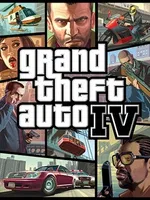
Grand Theft Auto IV (2008)
When Grand Theft Auto IV hit the market, it was immediately clear that this time around, Rockstar wasn’t trying to create more chaos, but a more believable world. The four long years of development were immediately evident in the final product. Liberty City no longer felt like an arcade game full of cartoonish characters, but rather a raw digital version of New York, where every neighborhood had its own atmosphere, bustle, and identity.
The new RAGE engine (which replaced RenderWare) enabled more realistic lighting, physics, and animations, thanks to which cars finally felt more substantial and unpredictable, shootouts were more intense, and the city itself reacted to the player more naturally than ever before. Pedestrians took shelter from the rain, argued on the streets, made phone calls, or simply walked home wearily after another bad day at work. Rockstar thus created a city that felt like a living organism.
At the same time, the entire game was built on a much more personal story than the previous installments. The main character, Niko Bellic, doesn’t arrive in America as a confident gangster craving luxury, but as a man scarred by war and his own past. When he realizes that his cousin’s promises of a perfect life were just an illusion, he slowly begins to sink into a world of the mafia, debt, violence, and corrupt organizations (Russian gangsters, the Italian mafia, and even the FBI).
GTA IV focused more on the disillusionment with the American Dream than on satire, with characters feeling more realistic, dialogue more down-to-earth, and the player’s decisions carrying greater weight. This was aided by a strong voice cast featuring names like Samuel L. Jackson (again) and other well-known actors, while Niko himself quickly became one of the most iconic protagonists in the entire series.
Fun Fact #1: Upon release, Grand Theft Auto IV ranked among the highest-rated games of all time and dominated reviews worldwide with a score of 98%. Rockstar invested approximately $100 million in development and marketing, but the game surpassed that amount almost immediately—earning more than $310 million on its first day alone.
Rockstar didn’t forget the sandbox aspect of GTA, either. Players could spend their time bowling, playing pool, visiting internet cafes, watching TV, or building relationships with side characters who would later assist during missions. Another major innovation was online multiplayer, where Liberty City transformed into a massive playground with competitive modes. The game broke records almost immediately upon release, earned extremely high ratings, and definitively confirmed that Rockstar Games no longer creates merely controversial action games, but projects capable of influencing the entire gaming industry.
As if that hadn’t been clear for a long time, right? The later expansions, Grand Theft Auto IV: The Lost and Damned and Grand Theft Auto IV: The Ballad of Gay Tony, then showed Liberty City from other perspectives—from the seedy biker underworld to the over-the-top nightlife full of drugs, clubs, and wealth. A work of art as a mirror of society.
Fun Fact #2: Upon release, GTA IV shattered records across the entire entertainment industry. Within the first 24 hours, it became the fastest-selling game of its time and set a record for the highest single-day sales among all entertainment products. By the end of its first week, the game had already grossed approximately half a billion dollars.
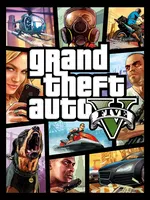
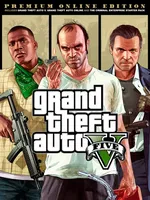
Grand Theft Auto V & GTA Online (2013)
With the release of Grand Theft Auto V in 2013, Rockstar was no longer just an ordinary game studio. Every new GTA installment was a global event, and the fifth installment took that status to new heights. Los Santos and the surrounding Blaine County created the largest and most detailed world in the series to date. From luxury neighborhoods reminiscent of Los Angeles to deserts, mountains, military bases, and run-down motels in the middle of nowhere.
The world felt livelier, more dynamic, and more absurd all at once. Rockstar packed the city with a massive amount of satire, TV shows, commercials, websites, and details that players were still discovering years after release. The gameplay was significantly snappier than in GTA IV; cars handled more like arcade games, and the action itself was faster, more cinematic, and more accessible.
Fun Fact #1: Grand Theft Auto V immediately made its way into the Guinness Book of World Records after its 2013 release. More than 11 million copies were sold in the first 24 hours, and the game managed to earn an incredible $815 million. In total, the game holds 7 Guinness World Records.
The biggest change, however, was the three protagonists. Michael, Franklin, and Trevor represented three completely different perspectives on the criminal underworld, and Rockstar allowed players to switch between them practically at any time. Michael was a burned-out former robber living in luxury, Franklin was trying to escape the life of a street gangster, and Trevor embodied pure unpredictability and chaos.
It was the combination of these characters that gave the story its unique pace and energy, as the game constantly shifted in tone from dramatic moments to cynical humor to completely absurd situations. Large-scale heists also played a major role in the campaign, where players chose the approach, team members, and method of execution for the entire operation, making GTA V often feel like an interactive Hollywood blockbuster.
However, Grand Theft Auto Online ultimately had an even greater impact than the campaign itself. What initially seemed like just a multiplayer add-on gradually turned into one of the biggest online phenomena in video game history. Players created their own character and started from the very bottom with only a small amount of money, no respect, and no luxuries.
Rockstar, however, constantly expanded the world of Los Santos with new missions, heists, vehicles, and entire storylines. The turning point came with the big heists, which finally introduced coordinated team actions and turned the online mode into a full-fledged experience. Gradually, motorcycle gangs, smuggling, casinos, nightclubs, and increasingly absurd futuristic gadgets—including flying motorcycles and armed vehicles—were added.
Fun Fact #2: GTA V also became the fastest-grossing entertainment product in history, surpassing the $1 billion mark in just three days, outpacing movies, music, and other video games at the time.
At the same time, Rockstar quickly realized that GTA Online was no longer a classic game, but a long-term service. Thanks to constant updates and microtransactions, Los Santos has managed to survive several console generations and maintain a massive community for over a decade. For some players, Online has become a place for daily entertainment; for others, a virtual second life through popular roleplay servers.
It is precisely the success of GTA Online that has significantly influenced the future of the entire series and largely explains why fans had to wait so long for the next main GTA game. Los Santos never truly died, and Rockstar simply never stopped expanding it.
Grand Theft Auto VI (2026)
After decades during which Grand Theft Auto redefined open-world games, pushed technological boundaries, and regularly sparked controversy and massive hype, the series is gearing up for another huge milestone. The wait for Grand Theft Auto 6 has stretched to a long thirteen years, and in the meantime, it has become perhaps the most anticipated gaming project of the modern era.
This time, Rockstar is returning to Vice City, a modern version of Miami, where the story will revolve around the duo Lucia and Jason, reminiscent of a modern-day Bonnie and Clyde. The game’s development has been accompanied by massive leaks, speculation, and countless internet theories, but now the endless wait is finally coming to an end. And if Rockstar manages to push the boundaries again, as it did with GTA III, GTA IV, and GTA V, the gaming industry is in for another moment that will be talked about for years to come. We’ve covered GTA 6 in detail in a separate article.
Conclusion & What's Next?
Today, Grand Theft Auto is much more than just a series of games about stealing cars and outrunning the police. It is a trademark that has defined the open-world genre for three decades, pushed technological boundaries, and at the same time managed to constantly adapt to the times in which it was created. From its chaotic 2D beginnings through the revolutionary 3D era to the realistic, cinematic HD era, Rockstar has repeatedly shown that GTA isn’t just about freedom in an open world, but also about a satirical take on society, the media, the American Dream, and the players themselves.
Each era brought something unique to the table. GTA III redefined modern sandbox games; Vice City and San Andreas became cultural icons of their time; GTA IV showed that the series could be darker and more personal; and GTA V, together with GTA Online, created a phenomenon that has spanned entire generations of consoles. Few game series have managed to stay relevant for so long while simultaneously making every new installment feel like an event the entire internet is talking about.
Check out: Everything you need to know about GTA 6 before its release.
And now we stand on the brink of the next chapter. After years of waiting, GTA VI feels like another major milestone that could once again change the rules of the game. However the future of the series may unfold, one thing is certain today–Grand Theft Auto has long since made its mark not just on the history of video games. It has become a part of modern pop culture.
Don't miss the first and second articles on the history of the Grand Theft Auto series.


