
 PC
PC  Xbox
Xbox  E-cards
 The Complete History of GTA (Part 2): The 3D Era
This time, our Grand Theft Auto retrospective dives into the legendary 3D era that transformed Rockstar Games into an industry giant. From the revolutionary impact of GTA III to the neon-soaked streets of Vice City and the massive sandbox of San Andreas, this chapter explores how GTA redefined open-world gaming forever.

In the first part of our series on the history of Grand Theft Auto, we looked at the series’ wild beginnings, the controversies surrounding the early games, and the founding of Rockstar Games. But now we come to the era that definitively turned GTA into a global phenomenon. The second part of the series focuses on the legendary 3D era, a period when Rockstar practically redefined open-world games and showed the entire gaming industry where video games were headed over the next decade.
It was a time of immense ambition, neon-lit streets, gangs, iconic soundtracks, and technological leaps that seem almost absurd today. GTA III shocked players with its freedom and vibrant city, Vice City turned the 1980s into one big digital party, and San Andreas showed that a video game could feel like an entire state brimming with possibilities. At the time, Rockstar seemed to know no bounds; every new game was bigger, bolder, more controversial, and in many ways revolutionary. And that is precisely why the 3D era of GTA is still remembered today as one of the most important periods in the history of video games.
Also read our previous article on the early days of the series and the 2D era of Grand Theft Auto.
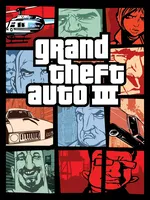
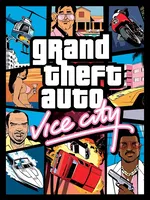
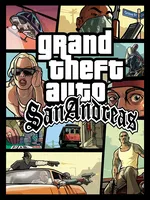
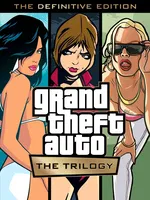
Grand Theft Auto III (2001)
The year 2001 marked a turning point for Grand Theft Auto that fundamentally changed not only the series itself but practically the entire gaming industry. Rockstar realized that, following the lukewarm reception of GTA 2, it needed to come up with something far more ambitious, and so it moved the series into a fully-fledged 3D world. Liberty City suddenly transformed into a bustling metropolis full of traffic, gangs, pedestrians, police officers, and details that seemed almost unbelievable at the time.
Players could steal any car, move freely around the city, listen to radio stations with music and commercials, complete main and side missions, or simply wreak havoc throughout the city. It was GTA III that showed what a modern open world should look like and set a standard that other games have been trying to match for years.
There was also a huge shift in the storytelling itself. While previous installments focused mainly on freedom and sandbox mayhem, GTA III offered a more cinematic experience with voice acting, motion-capture cutscenes, and a more cohesive storyline. The main protagonist was the silent Claude, who, after a bank heist, is betrayed by his partner Catalina and left to face the police alone. After escaping from a prison transport, he gradually gets entangled in conflicts between mafia families, gangs, and the Liberty City underworld, all to exact his revenge. The game’s atmosphere was rougher, more mature, and at times even cynical, which fit perfectly into the gritty world of crime that Rockstar had created.
However, the game’s development was significantly impacted by the events of September 11, 2001. Since Liberty City was a clear parody of New York, Rockstar tweaked several details shortly before release so the game wouldn’t seem insensitive in the wake of the terrorist attacks on the World Trade Center.
Some dialogue was removed, the appearance of police and fire trucks was changed, as was the game’s cover art, and the release was ultimately pushed back by several weeks. Despite this, GTA III became an absolute phenomenon. The game garnered rave reviews, broke sales records on the PlayStation 2, and inspired entire generations of other open-world titles, notably games like Mafia, Saints Row, and Watch Dogs.
Grand Theft Auto: Vice City (2002)
Following the revolution that was Grand Theft Auto III, Rockstar decided not to slow down, and just one year later, Grand Theft Auto: Vice City was released, transporting the series to the sun-drenched, neon-lit Miami of the 1980s. Originally intended to be just a minor expansion of GTA III, the developers’ ambitions gradually grew into a full-fledged sequel. Vice City built on everything that made the third game a success, but added a significantly more stylish atmosphere, better animations, a more extensive vehicle roster, and a host of new possibilities.
For the first time, players could ride motorcycles to their heart’s content, pilot helicopters or planes, buy real estate, and build their own criminal empire. A huge part of the game’s identity was also the radio stations filled with iconic hits from the 1980s, which turned a simple drive through the city into an unforgettable experience. It was during this period that DMA Design was renamed Rockstar North.
But back to the game. This time, the spotlight fell on gangster Tommy Vercetti, who, following a botched drug operation, found himself embroiled in a power struggle in a city controlled by the mafia, cartels, and street gangs. Vice City was the first GTA game with a fully voiced protagonist, and Rockstar built an almost cinematic presentation around the game, inspired by classics like Scarface and Miami Vice.
The atmosphere of luxury, crime, and excessive decadence perfectly captured the era the game depicted, and Vice City quickly became one of the most iconic entries in the entire series. Both players and critics were thrilled, and the game ultimately ranked among the most successful titles of its generation. This is evidenced, for example, by the fact that an incredible 1.4 million copies were sold in the first 48 hours after release—an astonishing figure for that time.
Grand Theft Auto: San Andreas (2004)
When Grand Theft Auto: San Andreas arrived in 2004, Rockstar no longer wanted to create just a bigger sequel. They wanted to create an entire state. San Andreas therefore didn’t offer just one city, but a trio of massive metropolises inspired by Los Angeles, San Francisco, and Las Vegas. All of these destinations were connected by highways, villages, deserts, forests, and rural areas. At the time, it was an incredibly ambitious open world that felt more alive and expansive than anything before it.
Players could fly planes, ride bikes, swim underwater, skydive, or customize cars, and the number of available vehicles and activities was once again on a much higher level compared to previous installments. Rockstar also significantly expanded the sandbox possibilities and worked on details such as more realistic shooting, stealth mechanics, and dozens of side mini-games (demolition derbies, BMX riding, and dancing).
RPG elements were also a major new feature. The main character, Carl “CJ” Johnson, could change his appearance through clothing, tattoos, or hairstyles, but the game also responded to his lifestyle. Overeating at fast-food restaurants caused weight gain, while regular exercise improved the character’s fitness and strength.
The story itself focused this time on gangs, street culture, and the atmosphere of the 1990s in the U.S. After his mother’s death, CJ returns to Los Santos, where he gradually becomes entangled in conflicts between gangs, corrupt cops, and the criminal underworld. Rockstar opted for a significantly more authentic tone and brought in a number of well-known actors for the voice acting, including Samuel L. Jackson, while CJ himself was voiced by rapper Young Maylay.
Upon its release, San Andreas immediately ranked among the biggest gaming events of its generation. Critics and players alike praised the massive amount of content, the freedom, and the incredible variety of missions, which made the game feel like a vast virtual playground full of unforgettable moments. The title racked up awards, broke sales records, and remains one of the most iconic entries in the entire series to this day.
At the same time, however, it also sparked one of the biggest controversies in Rockstar’s history. The discovery of the hidden “Hot Coffee” minigame in the game’s code was followed by a massive media scandal, lawsuits, and immense pressure on Rockstar Games and Take-Two Interactive. This was a minigame where the main character could engage in sexual intercourse.
Although this feature wasn’t available directly in the game, it remained hidden in the code, and modders eventually made it accessible in PC versions. The result? Rockstar Games and Take-Two had to pay $20 million to settle the dispute. However, this only confirmed that GTA had long since ceased to be just an ordinary video game, but rather a phenomenon that regularly transcended the boundaries of the gaming industry. The game also won 15 Game of the Year awards and sold 4.5 million copies in its first week.
Fun Fact: GTA: San Andreas holds the 2009 Guinness World Record for the most actors appearing in a single video game—861.
What's Next?
But while the 3D era made Grand Theft Auto the undisputed king of open-world games, Rockstar certainly wasn’t content to rest on its laurels. Another major revolution was on the horizon. In the final part of our series, we’ll therefore move into the HD era, where the series took on a more realistic tone, a more cinematic narrative, and a technological leap that definitively cemented GTA’s position as one of the greatest phenomena of the modern gaming industry. We’ll revisit Liberty City with Niko Bellic, explore the record-breaking success of GTA V, the launch of GTA Online, and the journey toward the long-awaited GTA VI.
See also: The previous article on the early days of the series and the 2D era of Grand Theft Auto.
See also: The third part of our series on the GTA franchise, focusing on the HD era and the present day.


